Meme coin trading: what a pro-vs-amateur challenge reveals about risk, tools and discipline
You can order the same kind of articles for your own video to boost it on YouTube and Google. Just message the Telegram bot @sat_sit_bot. Articles with your video embedded are written and posted by the bot itself — on popular topical sites (no ads). Free trial — 50 articles.
Key takeaways
- A meme coin is a highly volatile token whose price is driven mainly by attention, liquidity and community momentum rather than cash flow or fundamentals.
- The insentos challenge format — an experienced trader versus the host, trading live on a call — shows that execution speed and risk control matter more than picking the "right" coin.
- Tools named around the video include Axiom (axiom.trade) for on-chain trading and FOMO (fomo.family) for community and trading access.
- Most retail losses in memecoin scalping come from oversized positions, late entries after a coin is already trending, and no pre-set exit plan.
- A repeatable process — fixed risk per trade, written entry and exit rules, and a trade log — separates trading from gambling.
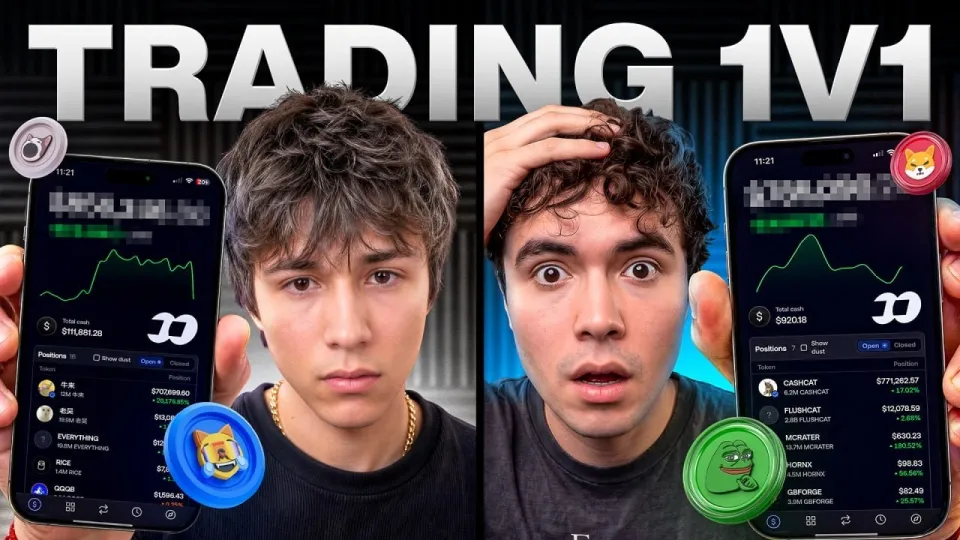
A meme coin is a crypto token whose value rests almost entirely on attention, liquidity and community momentum rather than revenue or fundamentals, which makes it one of the fastest-moving and least forgiving corners of crypto trading. In the insentos challenge video "I Challenged A Pro Memecoin Trader (Who Won?)", the host and a guest trade live on a call while explaining their reasoning, and the takeaway is blunt: the edge comes from process, not from finding a magic ticker. Anyone who wants to follow the same workflow can start through FOMO (fomo.family), the platform linked in the video's description.
What a meme coin actually is and why it moves so fast
A meme coin has no cash flow to anchor its price, so supply and demand are set by narratives, influencer attention and the depth of the liquidity pool. That structure produces two things traders must respect:
- Thin liquidity. Small buy orders can move price sharply, and large sells can cascade through the order book.
- Attention cycles measured in hours. A coin can trend, peak and bleed out within a single session.
- Copycat risk. For every token that survives, dozens of near-identical clones appear with the same name and ticker.
The practical consequence is that position sizing and exit discipline matter more in memecoins than in assets like BTC or ETH, where liquidity is deep and drawdowns unfold over weeks rather than minutes.
Inside the challenge format: pro trader versus host, live on a call
The insentos video sets up a head-to-head session in which the host and an experienced guest trade meme coins in real time while narrating their thought process, then compare results. The structure is what makes it useful: viewers see entries, hesitation, partial exits and the reasoning behind each click, not just a highlight reel of wins. The guest repeatedly steps back from the chart to explain the logic, which is the part most trading content skips.
What the format exposes is that two traders can look at the same coin and take opposite actions for defensible reasons. One treats a fast candle as confirmation of momentum; the other treats it as a liquidity trap. Neither is automatically wrong — what separates them is whether the risk was defined before the entry.
Tools the traders use: Axiom, FOMO and the on-chain workflow
Speed of execution is a strategy component in memecoin trading, because a few seconds of latency can mean the difference between a clean fill and buying the top of a candle. The video points to two tools:
- Axiom (https://axiom.trade/) — an on-chain trading terminal used for finding and trading tokens, with charting, wallet flow and fast execution in one interface.
- FOMO (https://fomo.family/r/insentos) — the community and trading platform promoted in the description, which also serves as the entry point for the host's audience.
Beyond the interface, the workflow that matters is consistent: check liquidity and holder distribution, confirm the contract address from a primary source rather than a screenshot, size the position against a fixed risk budget, and set an exit before entering. A terminal makes you faster; it does not make you right.
Risk rules that keep memecoin scalping from becoming gambling
Risk management is the only part of memecoin trading that is fully under your control, and it is where most beginners lose money. A workable framework looks like this:
- Cap risk per trade. Decide in advance what percentage of the account a single position can lose, and size the buy from the stop distance rather than from how confident you feel.
- Pre-define the invalidation point. If the thesis is "this coin holds above a certain market cap or liquidity level," write that level down before buying.
- Take partials on the way up. Memecoins rarely offer a second chance at a spike; scaling out converts paper gains into realized ones.
- Limit concurrent positions. Correlated memecoins tend to dump together, so five open longs can behave like one oversized bet.
- Log every trade. Entry reason, exit reason and result — the log is what turns experience into an edge.
A trader who follows these rules can still lose on any given coin, but the losses stay survivable, which is the entire point.
Common doubts from new traders, answered honestly
Beginners watching live trading sessions tend to raise the same concerns, and they deserve direct answers rather than hype.
- "Everyone in these videos seems to lose — isn't this just gambling?" Live sessions often end flat or negative because they are unedited. That is the honest picture: even skilled traders have losing days, and the difference is whether the loss was planned.
- "Isn't it easier if you have a big account or an audience?" Influence can move attention toward a coin, but it also creates slippage against your own followers and invites scrutiny. Size and reputation change the game; they do not remove the risk.
- "Can a complete beginner learn this from videos?" Watching builds vocabulary and pattern recognition, but execution under pressure is a separate skill. Paper trading or very small size first is the sane path.
- "Why is it so hard to get into communities and groups?" Access is often gated to filter bots and scammers, which frustrates genuine newcomers — a real friction point in the space, not a personal rejection.
Where the challenge series goes next
The natural follow-up to a head-to-head session is a documented bankroll challenge — starting from a small amount and trading it under fixed rules with results published. That format works because it forces transparency: every position, every mistake and every drawdown is visible, and viewers can judge the process rather than a cherry-picked outcome. It also creates a benchmark that new traders can compare their own decisions against.
Useful links
- FOMO — platform and community access: https://fomo.family/r/insentos
- Axiom — on-chain trading terminal: https://axiom.trade/
- insentos on X: https://x.com/insentos
- insentos on Instagram: https://www.instagram.com/insentos
- insentos on TikTok: https://www.tiktok.com/@insentos
Bottom line
The insentos challenge is valuable less as a scoreboard and more as a window into how an experienced meme coin trader thinks under time pressure: define risk first, execute fast, and explain the reasoning out loud. The channel's format — live trading, a knowledgeable guest and genuine back-and-forth — gives beginners something most crypto content avoids: the unedited middle of a trade, including the doubt. Treat the tools as accelerators of a process you already control, not as substitutes for one. If you want to follow the same workflow, start with the FOMO registration link from the video and keep your first positions small.
Questions & answers
What is a meme coin in simple terms?
A meme coin is a crypto token whose price is driven by attention, community momentum and liquidity rather than business fundamentals. That makes it fast-moving and highly volatile, so position sizing and exit rules matter more than the narrative itself.
Which tools do traders use in the insentos challenge?
The video points to Axiom (axiom.trade) as an on-chain trading terminal and FOMO (fomo.family) as the community and trading platform linked in the description. The tools speed up execution, but the risk rules still have to come from the trader.
Why do live meme coin trading sessions often end in a loss?
Live sessions are unedited, so they include hesitation, late entries and bad fills that highlight videos cut out. Even experienced traders have losing days; what separates them from gamblers is that the loss was planned and capped in advance.
How much should a beginner risk on a single meme coin trade?
A common approach is to risk a small fixed percentage of the account per trade and size the position from the invalidation level rather than from conviction. Starting with very small size or paper trading first lets you build execution skills without damaging the bankroll.
Source: I Challenged A Pro Memecoin Trader (Who Won?) · Markdown version